Wake effect
The slower, more turbulent air left behind an upwind turbine, which reduces output and increases loading on the machines downwind of it.
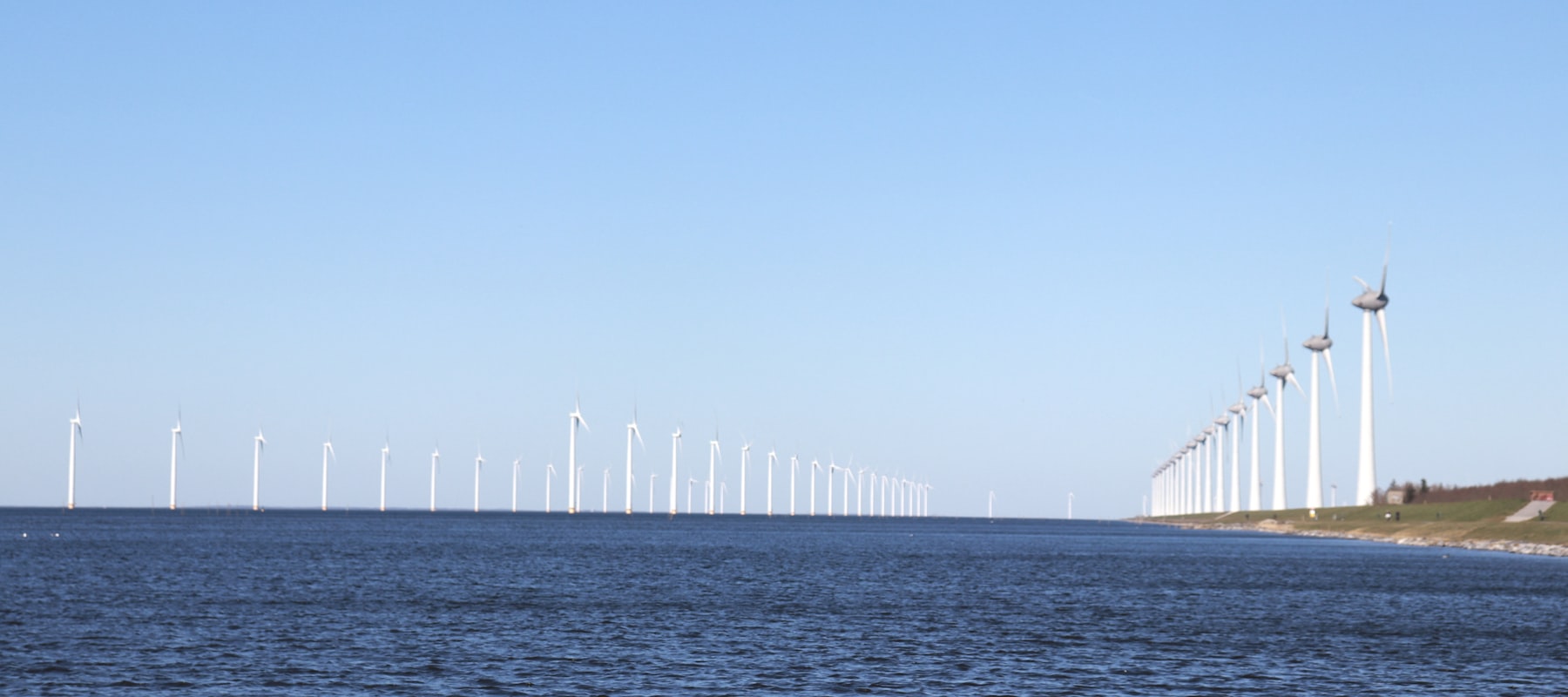
A turbine extracts energy from the air, so the flow leaving it is slower and more turbulent than the flow arriving. Downwind machines sitting in that wake see reduced wind speed and higher turbulence intensity, which costs them output and adds fatigue loading. The wake recovers with distance, but in a dense array it may not recover fully before reaching the next row.
Array losses of several percent are normal and are designed for; the problem is that wakes are strongly direction-dependent. The same turbine can be unaffected on one wind direction and deeply waked on another, so a machine that looks like a chronic underperformer in a headline figure may simply sit downwind of the prevailing direction. Wake also crosses property lines, and inter-project wake between neighboring wind farms is now a routine subject of both engineering and dispute.
That is why wake has to be modeled rather than averaged away. Attributing a loss correctly means separating what the array geometry explains from what the equipment explains - otherwise a waked turbine gets investigated for a fault it does not have, while a genuine yaw misalignment hides inside an expected array loss. Comparing each machine against its own matched-condition power curve is what keeps the two apart.
Wake steering, where upwind machines are deliberately yawed off the wind to deflect their wake away from the row behind, is the active response to this and is being deployed commercially. It only pays when the wake model and the loss attribution behind it are trustworthy, because the strategy sacrifices certain output on one machine for modeled gains on another.
A more intelligent approach to sustainable energy.
See how OpenTurbine can help your team understand performance, anticipate operational issues, and make better decisions across your wind assets.